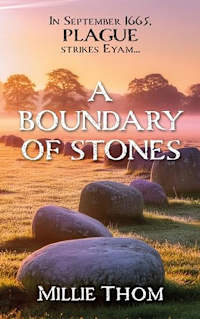
Set in the Derbyshire village of Eyam during the devastating outbreak of bubonic plague in the 1660s, A Boundary of Stones explores how faith, fear, and duty collide when a community is forced to confront the unimaginable. With no understanding of how the disease spreads and no cure beyond prayer, herbal remedies, and hope, the villagers are left to interpret their suffering as divine punishment — even as death tightens its grip.
At the heart of the novel is William Mompesson, the newly appointed rector, whose Church of England faith places him at odds with both the villagers and the embittered former Puritan rector, Thomas Stanley. Their uneasy relationship forms one of the most compelling tensions in the book, as both men wrestle with belief, responsibility, and the moral weight of the decisions being made. The question of whether faith divides or unites in times of crisis runs quietly but persistently throughout the narrative.
What stands out most is the attention to historical detail. Thom vividly recreates daily life in a seventeenth-century village — its routines, religious practices, and social structures — grounding the story firmly in its time. The focus on sermons, prayer, and communal worship may feel repetitive at moments, but it effectively reflects how deeply religion shaped the villagers’ worldview and their understanding of suffering and salvation.
While the pace can occasionally feel measured, it mirrors the slow, grinding reality of life under quarantine, where days blur together under the constant shadow of loss. The characters are portrayed with empathy rather than drama, allowing readers to appreciate the quiet courage required simply to endure. Rather than sensationalising the plague, the novel emphasises restraint, sacrifice, and the emotional toll of isolation.
Overall, A Boundary of Stones is a thoughtful and well-researched work of historical fiction that brings an important moment in English history to life. It may not be a fast-paced read, but it is a reflective and humane one — offering insight into how ordinary people faced extraordinary circumstances, guided by faith, fear, and a profound sense of communal responsibility.
⭐⭐⭐⭐⭐
Read my Goodreads review here.