What losing everything taught me about work, writing, and listening to myself
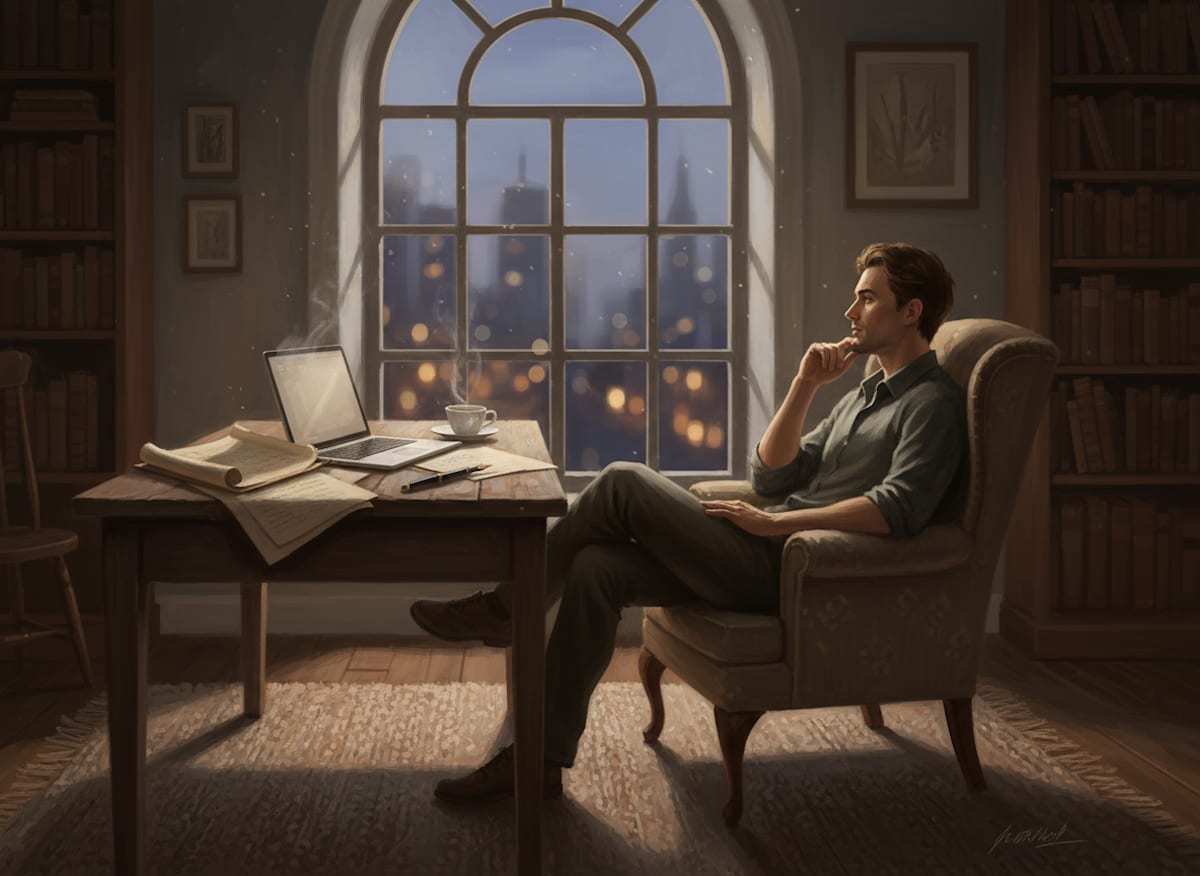
Less than a year ago, I sat in this very chair, staring blankly at my computer screen, my mind unraveling.
I had lost my job because of mental illness. And like so many people who find themselves suddenly unmoored, I believed the only way forward was back into the very world that had broken me: corporate life. It felt like a matter of survival. Do or die.
Looking back now, with clearer eyes, that period was one of the strangest—and briefest—gifts of my life. I call it my writer’s sabbatical. A rare pause from the buzz, the noise, the constant pressure to perform. For a fleeting moment, I had time—real time—to write.
The days rushed past. In nine months, I finished two books. All the while, banks chased arrears, my landlord knocked more than once, and friends I had supported disappeared without a word. We lived frugally, sometimes painfully so. But despite everything, I was thrilled. I was a full-time writer, however precarious that reality was.
My memoir, Growing Slowly Nowhere, flickered briefly with success before sinking back into the depths, nearly taking me with it. I tried again, publishing a sequel to an earlier book that had once raised a few eyebrows, only for it to settle into the same quiet obscurity.
Eventually, fear crept in. I convinced myself that returning to the modern workplace—however toxic it had been—was necessary. I needed money. I needed stability. I needed funds to promote my work.
The irony still stings: during that writing sabbatical, my anxiety had eased. I exercised. I slept. I felt comfortable in my own skin—something rare in my life. But necessity drowned reflection, and I stepped back onto the treadmill.
Two months later, I was commuting 75 kilometers a day, spending hours in traffic, wearing the uniform of “normality.” The offer was good. My wife smiled again. When my first salary landed, hope surged. I could finally afford advertising. I could make this work.
Armed with my background as a digital marketing technologist, I dove in. Campaigns. A/B testing. Targeting. Click-through rates that would impress seasoned brands. Traffic to my book pages soared.
Sales did not.
Instead, my anxiety returned—louder, sharper. Nights were spent responding to promises, spam, scams, and strangers offering shortcuts coated in sweetness. I worked by day, marketed by night, and slowly burned myself to the ground.
I spiralled. I crashed.
And once again, I landed in a mental health clinic.
It was there, stripped of devices and noise, that something important revealed itself—quietly. Only three friends truly remained. Three people who kept my stories alive while I wandered sedated corridors among the living dead.
On my final ward round, my psychiatrist looked at me and said words that still echo:
“You would do well to write full time. I see it in you.”
No sentence had ever steadied me more.
When I came home, I made discoveries that changed everything. I had sold more books while writing full time than when I returned to work. That truth hit hard. And with it came clarity: my real audience had never been faceless readers. It was fellow writers. Indie authors. People like me.
So I changed course.
I started reading—properly reading—the work of others. I left honest reviews. I listened. I learned. I rebuilt my website, reshaped my bio with brutal honesty, and began sharing daily updates—not as marketing tricks, but as lived truth.
And something extraordinary happened.
My follower counts dropped. Friends vanished. And in their place, a smaller, truer audience emerged—loyal, engaged, human. Traffic grew. Rankings climbed. Slowly. Honestly. Without ads. Without desperation.
What I learned is simple, but not easy:
Sometimes the bravest decision isn’t pushing harder—it’s choosing differently.
Sometimes success doesn’t come from shouting louder, but from listening better.
And sometimes, losing everything is the only way to find what actually matters.
I don’t know exactly where this road leads. But for the first time in a long while, I’m walking it with hope—and on my own terms.