It has been just over two months since I was discharged from a mental health clinic. For weeks, I waited for a question I assumed would come. I expected it, quietly and patiently, as one might expect rain after heavy clouds. No one asked.
Looking back, I’m surprised by how quickly the days passed while that question lingered unanswered, suspended in a liminal space between hope and expectation. So instead of waiting any longer, I will answer it myself.
What is it like to return home from a mental health clinic?
To answer that, I need to draw a contrast between two worlds — the clinic and home.
The clinic was a brightly lit box of scheduled therapies and shared anxieties. In its own way, it was simple. Each day followed a predictable rhythm: medication rounds, meals, group sessions. Time behaved strangely there, stretching during long afternoons and collapsing into a blur during the mornings.
Home, by contrast, is vast.
It is a place without scripts, filled with unscheduled moments and unexpected silences. The boundaries between day and night dissolve, and the absence of structure amplifies one’s own thoughts. When I returned, the quiet house felt enormous — not filled with the voices of therapists, but with the echo of myself.
During my time in the clinic, all I wanted was to go home. Whenever I could, I dragged a small chair to the high fence, climbed onto it, and stood on my toes to glimpse the outside world where life continued without me.
I never felt I belonged there. I suspect many patients felt the same. I saw it in the faces of the young woman and man who had overdosed — admitted for the same reason, yet bound by an uncomfortable silence they shared but never crossed.
I avoided contact as much as possible. Not because I felt superior, but because I was there to heal. Strangely, the more I socialized, the less progress I felt I made. My time in the clinic was always temporary — a refuge, not a destination. Others were not so fortunate.
In dining halls and common areas, I overheard stories of homes that were worse than the clinic itself — environments so hostile that admission felt like escape. Their lives revolved around therapist sessions, psychiatric evaluations, blood tests, reassurance, validation — the rituals that kept them moving forward, or merely standing still.
All I wanted was to return to my quiet, loving wife and my wag-tailed dog.
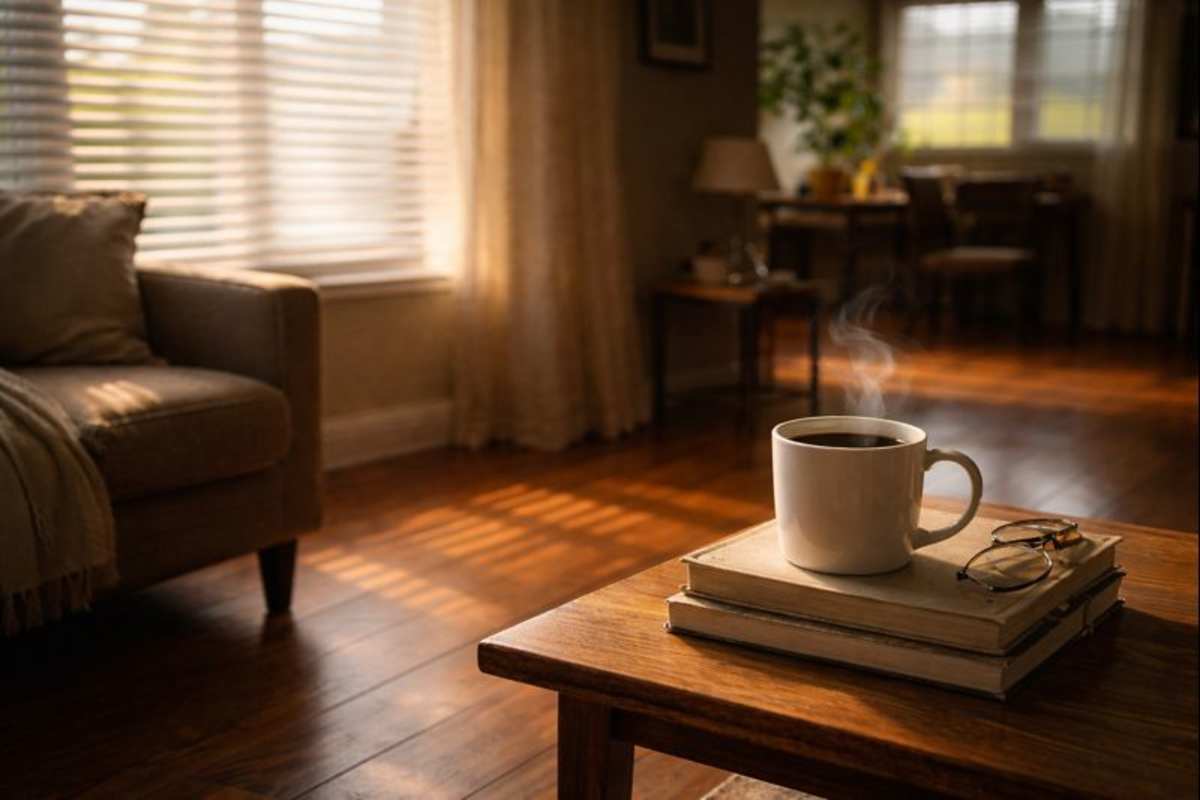
When the day finally came, the contrast was immediate — and it began with scent. The clinic smelled of antiseptic and bleach, of institutional order. Home smelled of freshly brewed coffee, familiar and comforting, something I had made with my own hands.
I unlocked the door. The click echoed in the sudden stillness, broken only by the low hum of the refrigerator. The absence of routine was both liberating and terrifying. Where once my day followed a prescribed path, it now unfurled like an uncharted map. The choices were endless. The responsibility was mine.
Sunlight filtered through the blinds, casting warm stripes across the floor. My eyes settled on a photograph on the mantelpiece — my wife, smiling, eyes crinkled at the corners, and our Jack Russell mid-leap, tongue out in unrestrained joy. The sight caused a physical ache. I realized how much life I had missed.
With freedom came unease. The sanctuary I had longed for now felt heavy, as though I had returned carrying something fragile I wasn’t sure I could protect.
My therapist’s voice lingered in my thoughts: “In case of an emergency…”
My mind catalogued my medication supply. Small white pills. Blue pills for sleep. Large oval mood stabilizers that always drew curious looks from pharmacists. Safety, measured in milligrams.
“I need a beer,” I said casually, glancing at my wife. She looked back at me with a furrowed brow — a look I’d come to know well. Concern, love, vigilance. Would it steady me, or undo me?
The next morning, I sat down to write. Instead of words, medical bills arrived. One after another. I reached for my emergency supply and reminded myself, breathing slowly, You are a changed man.
Or so I hoped.
So far, so good.