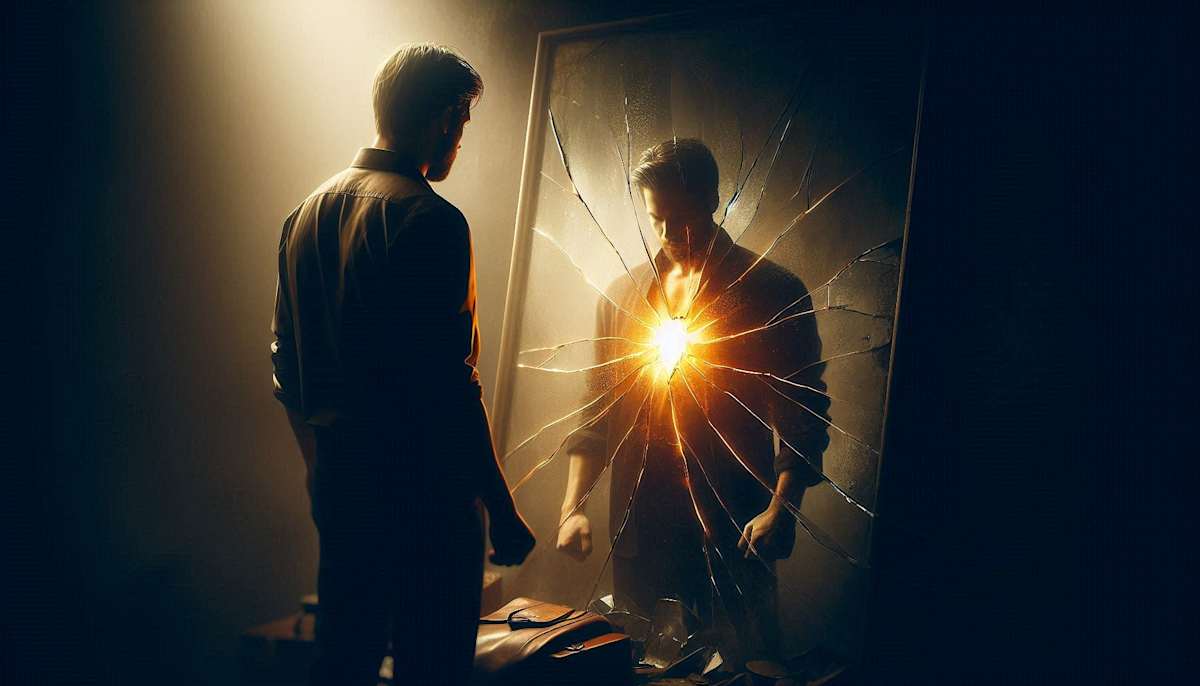
On empathy, boundaries, and the slow work of survival
You only truly learn when you’re outside your comfort zone, as the saying goes. Some people grasp things easily. Others—like me—learn the hard way.
It often takes repeated experiences before I internalise a lesson, before I understand what life is trying to show me. This isn’t conditioning, like training a dog. It’s something deeper. I usually have to live the difficulty before the meaning becomes clear. Whether that’s a strength or a flaw, I’m still not sure. But once I learn, the lesson stays with me.
Growing up, I learned many things the hard way that seemed to come naturally to others. With an absent father and a mother who worked tirelessly, I didn’t have a role model to teach me certain life skills. My education came through experience—often painful, often delayed. Most of my friends, and even my girlfriend at the time, matured faster than I did. I was always playing catch-up.
It felt endless. Every stumble was a brutal reminder of how far behind I was. Their understanding of the world seemed effortless, like a second language they’d always spoken. Meanwhile, I was still struggling with basic vocabulary. That gap created a profound sense of isolation—a feeling of always being on the outside, looking in. The weight of it was crushing at times, but strangely, it also forged something stubborn in me. I refused to stay behind, even if the path forward was lined with thorns.
One of the hardest lessons I had to learn was this: stop being the go-to person for everyone’s problems. If you’re nodding along, you already know—this isn’t healthy. Therapists are trained for a reason. People are complex, flawed, and deserving of care, but not at the expense of your own wellbeing.
For years, this was my blind spot. I understood the what, the who, and the when. But the why eluded me. When it finally clicked, the answer was almost embarrassingly simple: I’d turned this “skill” into a coping mechanism—a way to survive.
Because I struggled to make friends for other reasons—maybe I was just weird, and probably still am—I built a false persona: the good listener. That role attracts the strangest people. They sense it, like cats to catnip. Not the healthy ones, either, but those carrying unresolved pain, some with serious mental health issues. And the truth is uncomfortable: you can’t heal someone else when you’re fighting the same battles.
Once I saw it, I couldn’t unsee it. My mind ran through friends, colleagues, even family. The pattern was undeniable. I was the shoulder to cry on. I appeared during breakups, financial trouble, moments when their “popular” friends vanished. I absorbed complaints about marriages, parents, relationships—everything. I became a pressure cooker, sealed tight, heating steadily toward explosion. That was the when.
The how was slow and agonising. It began as unease—a persistent sense that something was off. Then came subtle manipulation, conversations quietly steering toward their needs, favours disguised as kindness. Anger followed. Resentment. I withdrew, made myself less available, erected invisible walls. Guilt accompanied every step, because I wanted to be kind, supportive, dependable. But my emotional reserves were empty, and the demands never stopped.
The breaking point came unexpectedly. A trivial complaint triggered a flood of everything I’d been suppressing. And in that moment, the truth surfaced, raw and undeniable: I was being used.
The who wasn’t a villain twirling strings from the shadows. It was someone exhausted by their own pain, someone who had unknowingly turned me into an emotional crutch. That knowledge didn’t soften the betrayal—it complicated it. Empathy, once freely given, suddenly felt dangerous. Survival required distance. Boundaries. Severance. What followed was a quiet unraveling, and then, slowly, a rebuilding.
I was late learning this—again. My good intentions had consequences. I knew I had to act before I landed back in a mental health clinic. And when I did, something unsettling became clear: people disappear when you’re admitted.
The irony wasn’t lost on me. Even inside the clinic, during so-called “alone time,” I had to hide. People sense openness—a listening ear, a kind smile, empathetic eye contact—and mistake it for availability. They offer coffee, small favours, then quietly collect payment in emotional labour. Empathy always came with a hidden cost.
The solution didn’t arrive as a plan, but as a revelation. Not sudden—gradual. A slow peeling back of layers. What I realised was simple, but profound: I had the right to self-preservation.
It began with a single word: no.
A boundary. A line in the sand. A declaration of worth.
The fallout was immediate. Some people vanished. Others grew resentful. But when the dust settled, something unexpected emerged—peace. I rediscovered my own voice. I made space for genuine connection. I learned that real friends don’t demand; they support. They don’t take; they give.
From there, I started building. Not with grand gestures, but small, intentional choices. I learned to identify my needs and honour them without apology. Old habits lingered, but with every “yes” to myself, the walls grew stronger. The silence left behind was eventually filled—not with noise, but with calm. With self-respect. With the quiet joy of a life lived on my own terms.
I finally stopped being everyone’s therapist—Doctor Phil, as a friend of mine jokingly calls it. She was the exception. The one who stayed. I tested my theory with her, and it worked. She once told me it felt less like toughness and more like a recipe for healing.
We’re still best friends. And alongside my incredible wife and my dog, she remains one of the few people I know I can trust completely.
A change occurs.