By Iwan Ross
I turned fifty-five inside a mental health clinic.
My wife, ever the comedian in the darkness, called it “pyp en pyptig” — a playful Afrikaans twist that made both of us laugh through the fear.
But the real birthday gift arrived the day before.
A name.
An explanation.
A truth I had been chasing my entire life.
Before the Diagnosis: What It Feels Like Inside My Skin
To understand why the truth mattered so much, you need to understand the chaos from the inside.
Here is what my condition feels like from the passenger seat of my mind:
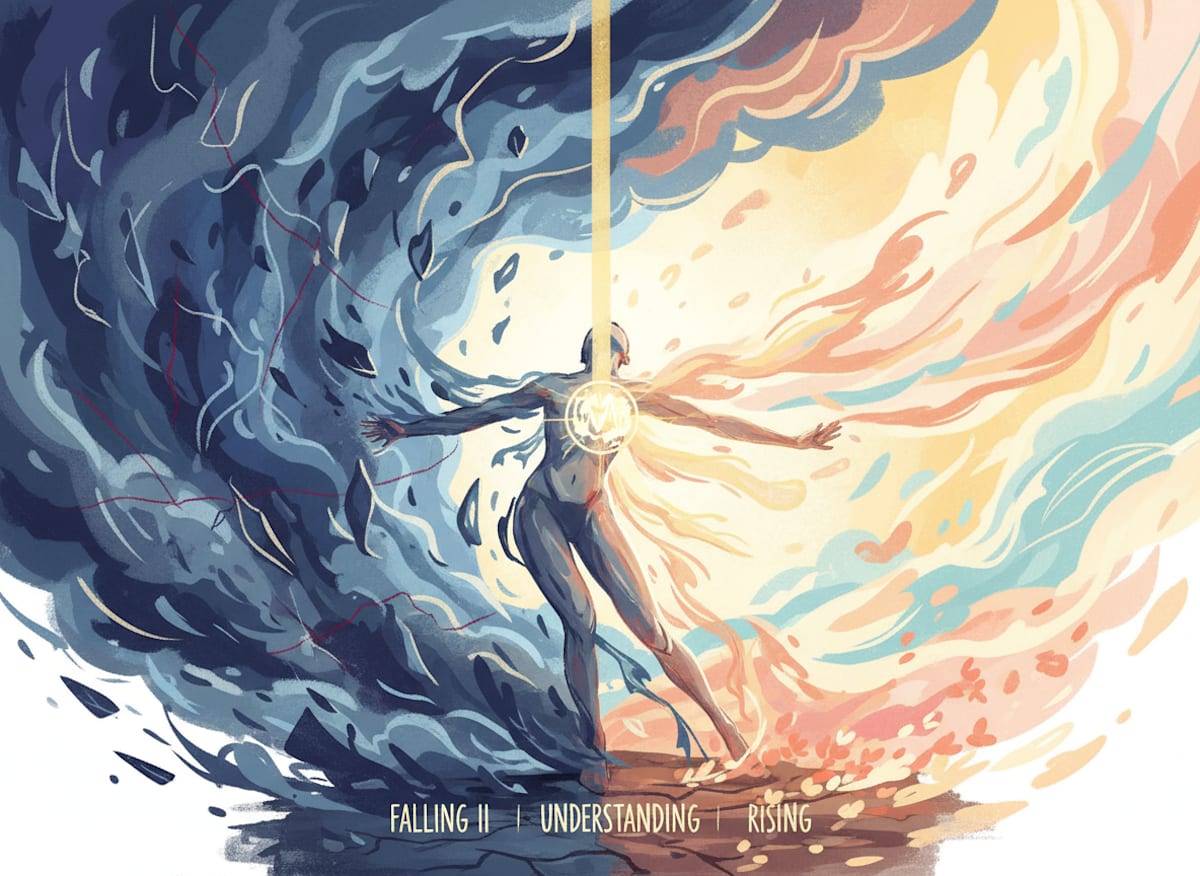
Imagine falling.
Hurtling toward the earth at impossible speed.
Wind tearing past your ears, gut hollowing out, fear coiling like a fist in your stomach.That’s one pole.
Then—
a safety net appears below.
Relief floods in.
You want to scream your joy to the world.
Your heart expands.
You feel alive, powerful, euphoric.
That’s the other pole.
But the net always shifts.
And so you fall again.
Two opposing forces, both real, both yours.
Both happening at the same time.
This is the best way I can explain Bipolar II from inside the illness — before the medication softened the edges and dimmed the constant storm.
The Moment Everything Made Sense
In the clinic, most patients saw a psychiatrist and a psychologist every day.
I only saw the psychiatrist.
“There’s no psychological danger here,” she told me.
(If she only knew what was going on inside my head.)
One morning, she called me in.
She looked at me with a softness I was not expecting.
I’m ready to give you your prognosis,” she said.
And she told me:
“Bipolar II Hypomania.”
My smile gave me away instantly.
“You’re not surprised,” she said gently.
“No,” I told her.
“You’re the first person who has ever told me what’s actually wrong.”
She smiled—
a real smile, warm, human.
The kind you remember.
“It’s a very common disorder,” she began.
“It’s not a disorder,” I cut in.
“It’s life.”
And she didn’t correct me.
Instead, she asked about my encounters with psychologists.
“What happened?” she asked.
“What always happens,” I said. “It ended in heated romance.”
She blinked.
Then smirked.
“It often does.”
For the first time in my life, I felt seen.
A Birthday I’ll Never Forget
They sang happy birthday for me in the dining hall.
Brought me cake.
Called me by my new nickname — “Uiltjie” — because of my round, owl-like eyes.
And strangely enough, they liked me there.
Even when I was grumpy.
Even when I hid behind sarcasm.
Even when I kept to myself.
Maybe they saw something familiar in me.
Maybe broken people recognize each other.
But walking out of that clinic with a diagnosis felt like stepping out of the fog.
I finally had a name for the storm.
And once you have a name, you can fight it.
Live with it.
Grow from it.
For the first time in decades…|
I wasn’t lost.
I was found.