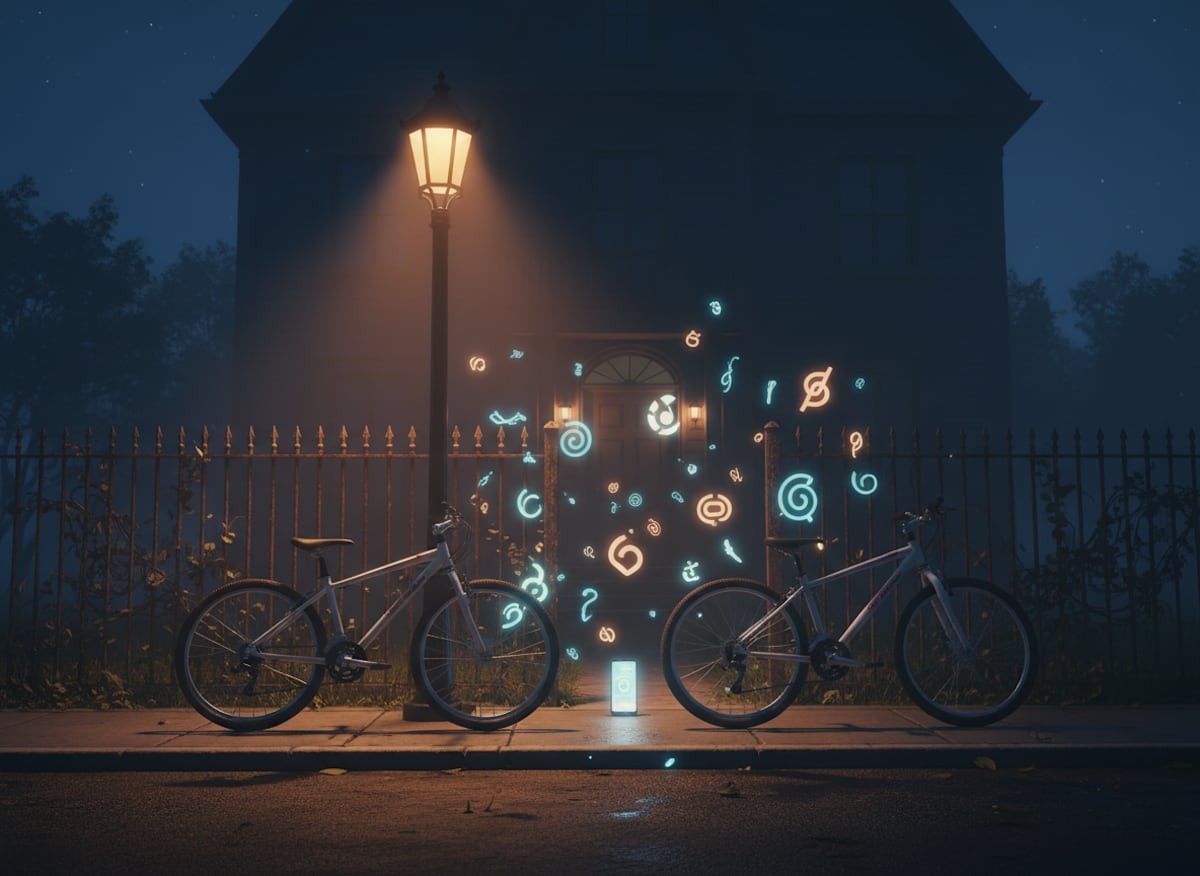
A while back, something strange began happening outside our home. Children kept gathering in front of our gate — riding their bikes in circles, whispering to one another, lingering longer than children usually do. At first, it looked innocent. Kids being kids. I brushed it off.
But I had a surprise coming my way.
And so did their parents — though they’ll likely never know it.
The First Signs: A Wound, a Smile, and a Post-It Note
One afternoon, while greeting a friend outside, two girls sat cross-legged on the pavement, staring at our front door like it held buried treasure. One had blood running down her knee. She called it an “accident,” and I believed her — scrambling for a plaster like any decent adult would.
Only later did the truth dawn on me: that wound may not have been an accident at all. It may have been a calculated bid for attention — a lure.
The more I replayed the day in my mind, the more it all began to make sense.
There were post-it notes stuck to our garden gate — “XOXO” and other cryptic messages.
There were little lingering smiles.
There was a strange hyper-awareness in the way they watched us come and go.
Their ages? Eleven and fourteen.
Old enough to use social media.
Young enough to be dangerously unprepared for the world it opens.
How the Videos Changed Everything
Around this time, my wife and I had been posting homemade videos on two major social media platforms. Simple things — cooking logs, a few fun clips, even a surprise recipe that performed better than we expected. Nothing viral, nothing huge. But enough.
We also started collecting the “Little Shop Goes Xtra” miniature toys from our local supermarket. Each one tiny, adorable, and — as we would later discover — highly collectible and valuable among kids.
I filmed the collection.
Smiled into the camera.
Showed a tiny shopping trolley without thinking.
And that was the turning point.
The very moment the dominoes began to fall.
“Can we have ice cream?” — The First Ask
Friendship often starts with a greeting.
Manipulation often starts the same way.
“May we have some ice cream?” one girl asked, coasting on her bicycle into our driveway. I remember standing there stunned — struck by the absurdity of it, the boldness of the request… and the innocence of her face.
Then came:
“I’m hungry.”
And the truth, though I didn’t see it then, stared right at me.
I opened the gate — an act of misjudgment I will remember for the rest of my life.
Young as they were, they played their parts flawlessly.
They admired that I was a writer.
They asked for copies of my books.
They watched my every move with a fascination that, at the time, felt sweet.
Two girls became four.
Four became six.
My driveway looked like a youth club.
I eventually had to set boundaries.
But even then, I hadn’t uncovered the real reason they were there.
The Treasure They Wanted Wasn’t Ice Cream — It Was Status
It was the miniature toys.
Particularly the rare shopping trolley — the one that wealthy parents were paying astonishing amounts for on resale markets so their kids could boast the rarest of the rare.
These girls had discovered, through my videos, what I owned.
They’d tracked me down.
They’d found my street.
They’d found my exact house.
And somehow, impossibly, they had used social media to do it.
I didn’t understand it then. But I do now.
The Fake Letter, the Demands, and the Manipulation
The girls wanted to swim in our pool. That was their next goal.
I told them plainly that I needed written permission from their parents.
What they produced instead was a fake letter — written in their own handwriting — granting themselves full access to our home. Their “parent” even listed demands:
- that I share my collectible toys
- that I lock my dogs away
- that I provide them with a spare key
- that I deactivate the alarm in our absence
I’m not exaggerating.
This actually happened.
When I said no, the behaviour changed instantly.
They became verbally abusive.
One hit me in the face with a stick — I nearly lost an eye.
The sweetness evaporated.
The mask fell off.
My social app received an onslaught of friend requests from strangers.
Not strangers — shadows.
By then, my wife called them “the wicked sisters.”
And she wasn’t wrong.
The Frightening Discovery: Their Fake Accounts Had Photos of Me
After they disappeared, I worried — genuinely — that they’d fallen into something dangerous. So, being a writer and investigator of the human heart, I went looking.
And what I found made my stomach twist:
- Fake accounts
- Their photos
- Posts featuring me
- Social trails designed to track adults
- Hidden usernames
- Private lists
- Clues pointing straight to my house location
It hit me like a punch to the chest:
They had used social media to find me.
Not by name.
Not by location.
But by clues in my videos — objects, shadows, reflections, background details.
It’s possible.
It’s frightening.
And it’s happening everywhere.
This Is the Reality Adolescents Live In Now
This experience opened my eyes.
It unsettled me.
It changed how I view online safety forever.
Parents, please understand:
Your children are not just consuming social media.
They are performing on it.
They are strategising on it.
They are competing for social currency.
They are learning manipulation far earlier than we ever imagined.
And they know far more about tracking, finding, and engaging strangers online than most adults do.
Not out of malice —
but out of loneliness, boredom, status-seeking, and the endless pull of the digital stage.
What I Learned — And What I Want You to Know
After this ordeal, I:
- manually tightened every privacy setting on my phone
- deleted apps, reinstalled them under safer aliases
- stopped filming anything with clues in the background
- became extremely cautious about geo-location
- learned that adolescents can be shockingly resourceful when social status is on the line
This isn’t fearmongering.
This is lived experience.
Yes, there are articles, studies, statistics about the impact of social media on adolescent mental wellbeing.
But stories matter too.
And this one is mine.