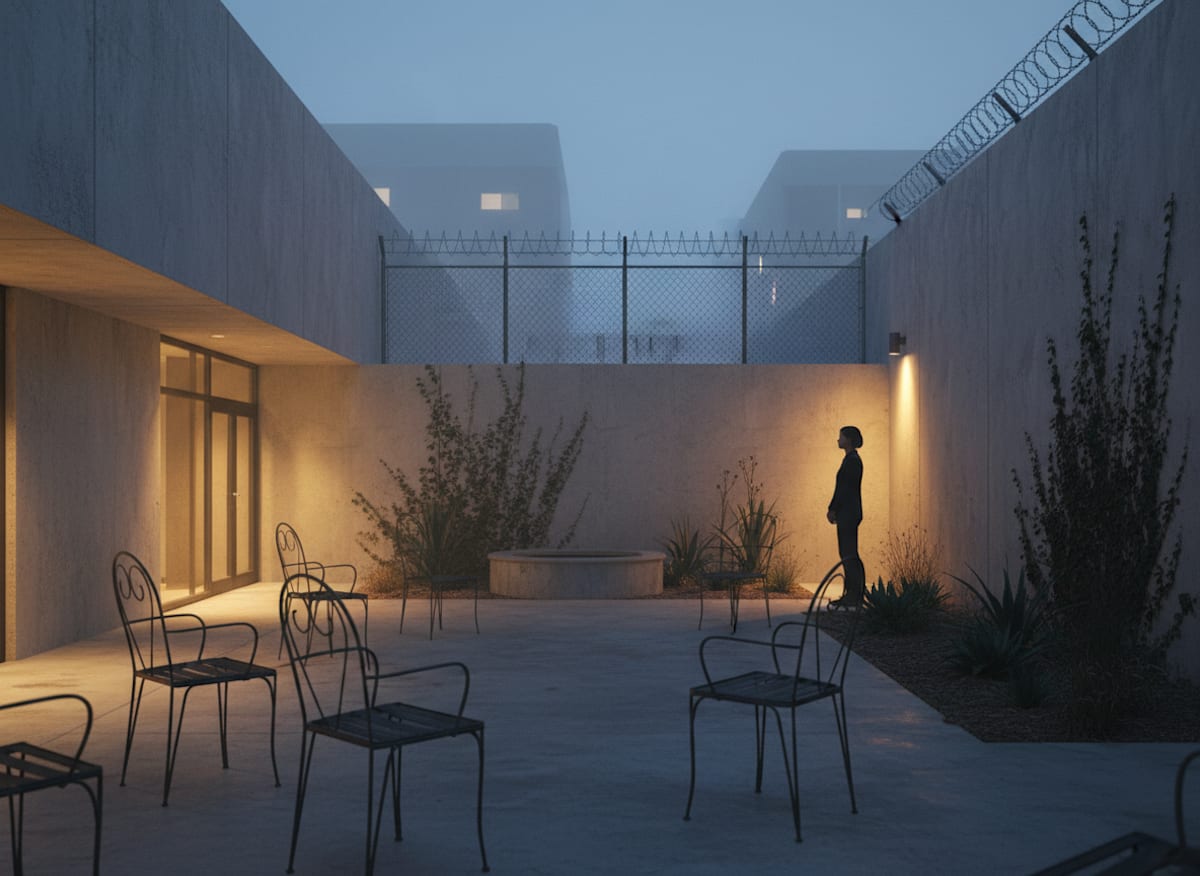
Something has been gnawing at me ever since my recent release from the mental health clinic. A quiet tapping at the back of my mind, reminding me that I had missed something—something important.
One night, lying awake beside my wife, her gentle breathing syncing with the ticking clock, the truth struck me like a blow to the gut:
their faces.
Suddenly I was back there again—the same courtyard, the same cold benches, the same sterile smells. We would sit outside in the twilight, waiting for six o’clock. Fifty-seven… fifty-eight… fifty-nine… six.
The intercom would crackle to life and the buzzer would sound, and in a heartbeat the silence shattered. Voices rushed in. Children ran to their parents. Husbands embraced wives. Wives clung to partners. Tears, laughter, relief. An hour of borrowed normality.
I would stand there with my hands behind my back, hiding the small gifts I had made in art class—clumsy little things, because writing is the only fine art I truly possess. My eyes would search until they found hers. My wife’s tenderness undid me every time; I’d swallow a silent sob as she hugged me, whispering promises that meant the world in that moment.
“I got you something,” I’d say.
And she always whispered, “Thank you. I love it,” pressing my crooked creation to her heart.
That hour always vanished too quickly.
After we said goodbye, I would rush to the courtyard fence, climb onto a chair, and wave until she disappeared from sight—ignoring the whispers behind me. I didn’t care. That farewell meant everything.
But later, after my release, one truth kept clawing at me—one I had overlooked in those moments of reunion:
The people who sat alone.
Those without partners, without parents, without friends coming through the gates.
The singles.
They occupied themselves with pointless little tasks just to fill the time. Their stories stayed with me far longer than the cheerful tales of the young married couples.
One afternoon, a girl asked a simple question that cracked the air open:
“Single people… be honest. How is life without a partner?”
It was as if a faucet burst.
Voices tumbled out.
One woman had her dog.
An elderly lady had her cat.
Another lived for weekly bridge and bingo.
Someone loved livestreaming on TikTok and Instagram.
A man confessed he spent hours on the couch, too depressed to even go to bed, drowning himself in endless TV shows.
Patterns emerged.
Similarities tied them together.
Many of them had been there more than once.
My mind screamed:
“This is where they find friends. This is where they find human connection.”
I felt a surge of sadness so strong I wanted to hug every single one of them. But I didn’t. I couldn’t. I was there to heal myself.
When that memory resurfaced beside my sleeping wife, I leapt out of bed and began writing. Inspiration poured through me. But the question lingered, unanswered:
How is life without a partner?
To answer that, I had to turn inward—to my first time in a clinic, when I was single. The truth? I couldn’t bear the loneliness. I started a relationship with another patient—an almost fatal mistake.
Let me say this clearly:
No matter how dark things get, never date a co-patient in a mental health clinic. It’s better to be single.
I learned that the hard way.
Since coming home, I’ve made small but powerful changes—mostly to my attitude. I live in the present now. I greet people in restaurants and pubs with a smile, even if it’s forced at first. I shake hands. I wave at strangers. I do the same at work and during sport.
And something miraculous happened:
People started liking me.
And one more thing I finally understand:
Many people are single because they want to be. Because they choose to be.
And who can blame them?