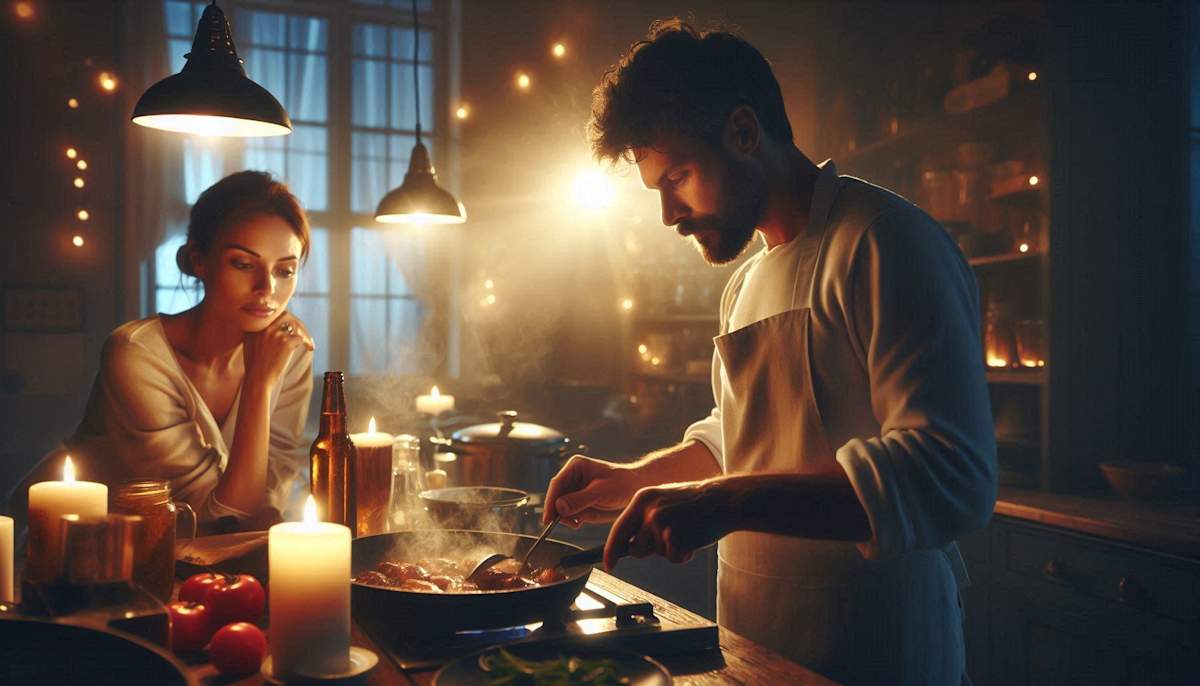
This has happened to me many times, and I can’t ignore it any longer. I want to name it, if only to see whether others recognise it too. Let’s call it a phantom appetite.
My wife is a meticulous meal planner. Menus are decided well in advance, lists carefully written, cupboards stocked with military precision. When she’s in a good mood, she takes me along to the shops, fills the trolley, and my contribution begins and ends at the card machine. At home, everything is rationed, labelled, and distributed between our two fridges. I’ve long since stopped asking what’s for dinner — experience has taught me that curiosity is rarely rewarded.
It’s how she grew up. It’s sensible. It keeps the budget intact.
I, on the other hand, come from constant change. Different homes, different circumstances. I learned early to be grateful for whatever meal appeared in front of me. Somehow I always got by — through luck, kindness, or the quiet generosity of others. I like to think I’m decent company; perhaps people enjoyed feeding me. But that life came with its own costs. I lived hand-to-mouth, not just financially, but mentally. I bought what I needed when I needed it. Planning beyond the day felt unnecessary, even alien.
And then fate, in its usual indifference, brought us together.
Those early days — our first small apartment — still glow in my memory. We were hopeful, determined. We clashed too. My lack of foresight frustrated her; her structure unsettled me. As marriages tend to go, compromise arrived wearing her shoes. It was good for our finances, undeniably. Less good, perhaps, for something quieter inside me. Not resentment — just absence. A part of myself went missing without complaint.
Years passed. Life happened. And recently, through a series of events — including struggles with my mental health — something shifted.
Yesterday, it clicked.
I wanted curry. Not vaguely. Not abstractly. I needed the curry I know how to make. I could smell it before I started. My mouth watered. My body was already halfway there. When I realised I was out of garam masala, I grabbed my keys and went. No list. No plan. Just instinct.
The onions browned perfectly. I put on house music, opened a beer, and let my hands take over. Cooking became ritual — intimacy, almost. Cumin, garam masala, coriander hitting the pan. And then memory arrived uninvited: childhood laughter, a friend’s mother smiling down at me as I stood on a crate beside her stove.
“Stir gently,” she’d say. I still hear her accent.
My hands knew what to do. Chicken. Potatoes. Tomatoes. Cream. I tasted without thinking, adjusted without measuring. More cumin. More coriander. Mild curry powder. One hot. A stock cube. The sauce thickened into something golden and familiar — a small, fragrant piece of heaven.
“Mmm,” my wife sighed from the chair. “That smells just like your curry.”
I raised my beer in reply. She smiled. The rest unfolded naturally — candles, wine glasses, quiet glances. Food does that. It sets the tone. It invites closeness without demanding it.
We ate. We laughed. We went back for seconds, tore through naan, felt energised in that deep, wordless way. Later, we drove to our favourite pub, still buoyant, still connected. The barmaid smiled knowingly. Strangers glanced over, curious. If only they knew the recipe.
I’ll spare the rest of the evening’s details. Some things deserve privacy.
This morning, I woke up feeling new. Light. Restored. I knew exactly why.
Food holds more power than we like to admit. Medicine evolves, researches, treats — and yet never quite claims to heal. Food, when made with memory and instinct and love, does something else entirely.
As I was writing this, my wife stirred awake.
“I slept so well,” she said, stretching. “I feel amazing. That curry did wonders.”
I smiled. It wasn’t imagination. It never was.