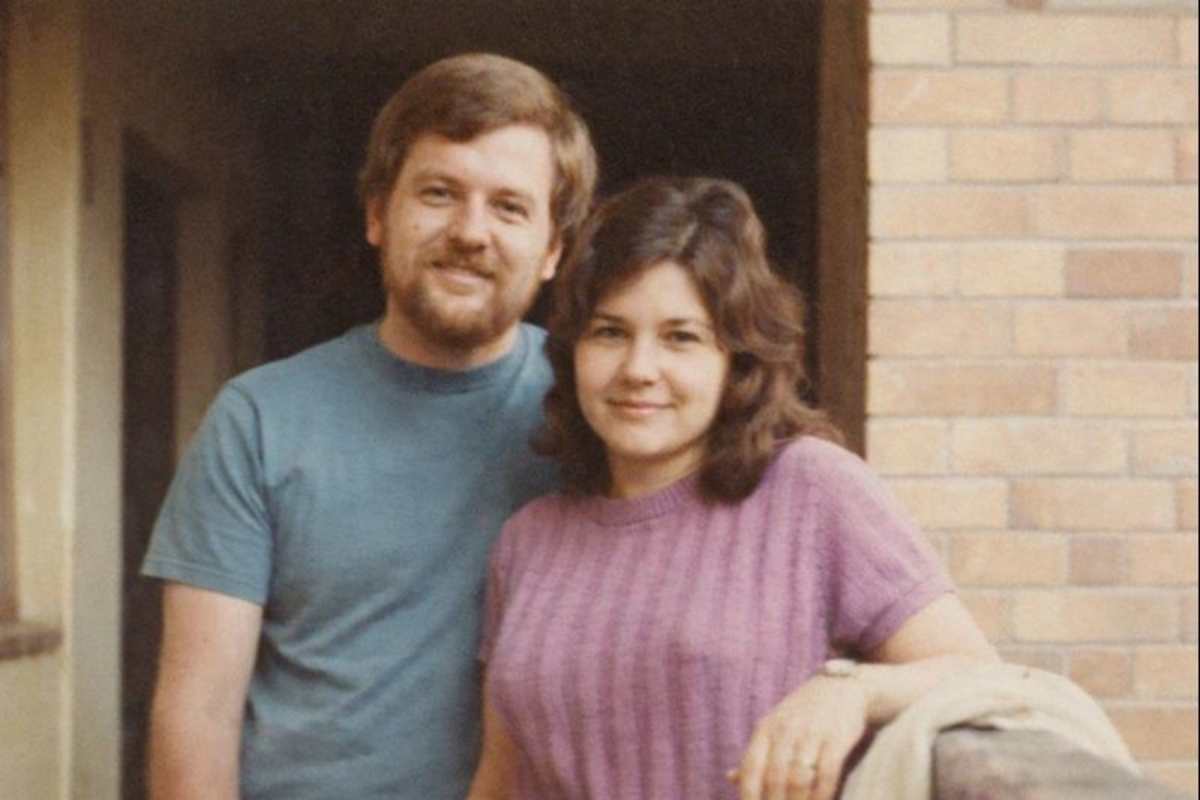
On fathers, ghosts, forgiveness, and finally letting go.
Every single year, around the same time, I would take a pen and paper and write a letter to Santa.
It always said the same thing:
Dear Santa, please let me hear from my father — or send me a message from my father.
I would fold the letter neatly and walk to the nearest postbox, its familiar red paint standing out against the dullness of winter. I’d slip the letter through the narrow opening, as if the postbox’s mouth were frozen in a perpetual yawn, and then I would wait.
The waiting was the hardest part.
Days would tick by until Christmas finally arrived — and of course, nothing ever came. No message. No miracle. Just disappointment. The only thing that changed over the years was the speed at which time passed. The disappointment stayed the same. It’s one of the few emotions that feels identical whether you are young or old.
This year, something changed.
For the first time in my life — after fifty-four failed attempts — I did not write the letter.
It wasn’t that I stopped believing. It wasn’t that I didn’t want gifts. Everyone does. I was grateful for the piles of books I received this Christmas, especially as a full-time writer.
I simply stopped caring.
Yes — I stopped caring.
I don’t know exactly how it happened, but I know why. And you’ll discover the when as you read on.
Despite what this may sound like, my search for my father did not stop this year. In fact, it intensified. I started a podcast dedicated to finding him. I created a Facebook page. I dug deeper than I ever had before.
What I found, however, wasn’t him.
I discovered something else entirely.
I found out that I had a sister. And a brother.
My sister was the easier one to find. When I first reached out, she was in hospital. A friend told me she was battling cancer in Israel. After some time, we made contact — and it became one of the most extraordinary periods of my life.
Strangely, I had always known she existed.
As a child, I used to have the same recurring dream. I would wander through a square, and she would be sitting quietly in a corner. When our eyes met, tears would roll down her cheeks. It was vivid. Persistent. Unshakable.
When I once asked my mother about it, she simply said, “She died.”
It felt like a curse — or perhaps something more deliberate.
Over the following months, my sister and I exchanged messages and stories. I even tracked down my father’s best friend, who had moved to California. In a short time, I learned more truth about my father from my sister than I had in decades of accumulated lies.
For the first time, my identity began to take shape.
Then came the silence.
No replies. No updates. Just the low, constant buzz of absence.
I panicked. I searched everywhere. I contacted anyone I could find. I combed through her small circle of friends on Facebook — and that’s when I discovered my brother. My wife was the one who connected the final dots.
Not long after, the news arrived.
My sister had died.
Her final words to me were:
“Please don’t stop. Find him.”
The only photograph I have of her comes from a eulogy her best friend shared online.
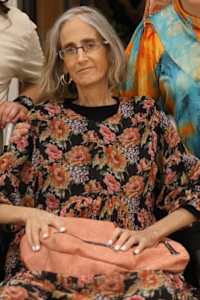
This loss broke me.
It led to my eventual admission into a mental health clinic — the moment where everything finally slowed down. This was the when.
With nothing but time, my thoughts circled endlessly: my father, my sister, her last request, the life I’d lived without him.
Then the realisation hit me — sudden and brutal, like a bus tearing through my thoughts.
I said it out loud:
“I carry my father’s burden.”
I’m not a religious man, but I understand faith. I realised I had been carrying my father’s sins on my shoulders my entire life. As the youngest in a fractured family, it made terrible sense. We all know the phrase “the sins of our fathers” — but few truly grasp its damage.
It nearly destroyed me.
It destroyed my brother.
As the eldest, he bore it the hardest — trying to become the man of the house, the protector, the leader. He lost everything. His wife. His children. His life. He wanders now, lost, dependent, high — and I finally saw him clearly.
I forgave him.
For the bullying. The cruelty. The torment.
And for the first time, I felt pity for my mother too — raising two boys alone after my father left. But forgiveness has limits. Her lies remain unconfessed, and until they aren’t, that door stays closed.
This is a story for another time.
So this is where I end it.
Over to you, Father.
You ran away. A real man would have stayed. A real man would have owned his failures. You hid instead — in shadows, in silence, in cowardice.
You never once considered how your choices would echo through generations.
I thank whatever force protected me from ever meeting you.
My life was better without you — I just didn’t know it yet.
I have a wife who loves me fiercely. I will protect her as I always have — from the past, from the lies, and from you.
Stay away.
You are already gone.