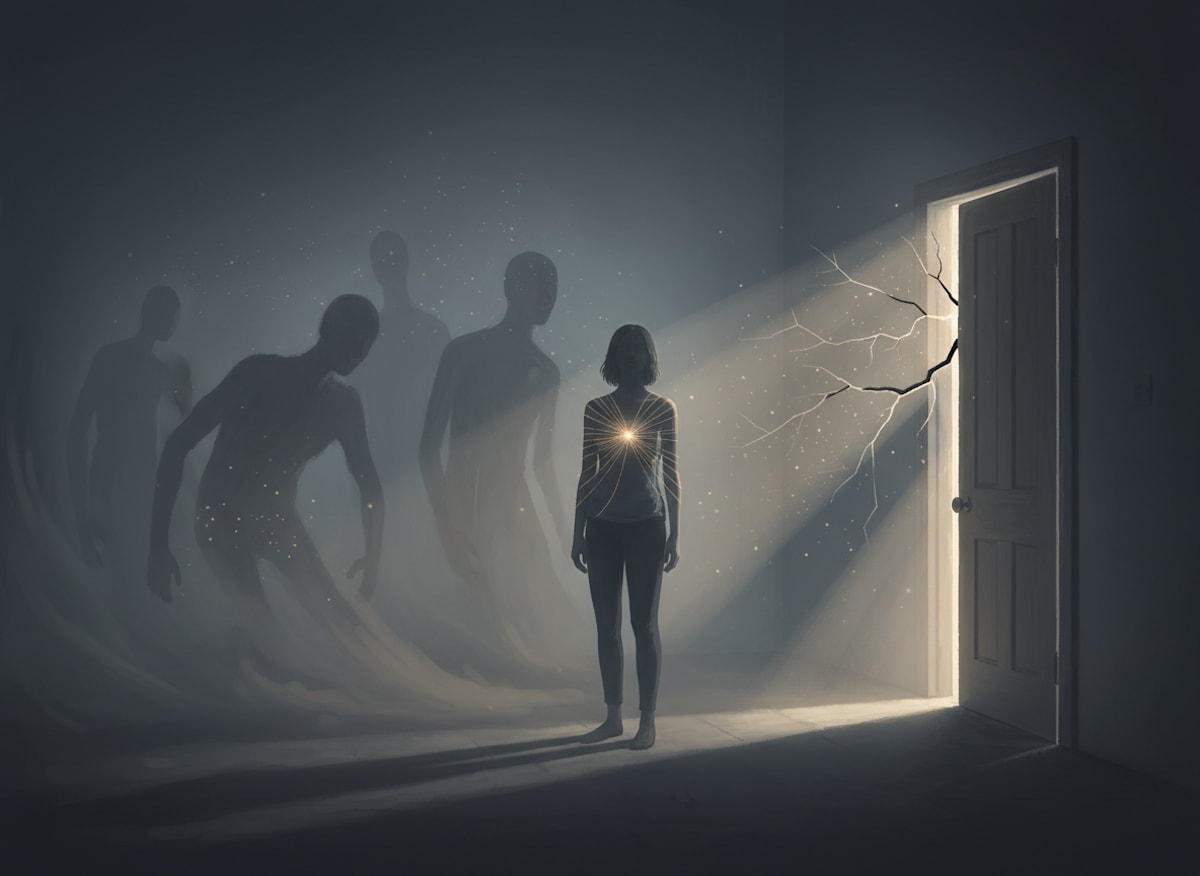
Part I: The Wounds They Smell
by Iwan Ross
Since my release from the mental health clinic a little more than a month ago, a voice has been gnawing at the back of my mind. At first, I brushed it aside, drowning myself in work and responsibility. But the voice grew louder with each passing day — a fog that refused to lift — until I finally stopped and listened.
It asked a simple question, but one loaded with years of weight:
Who are these people who abuse us? The bullies. Dammit — who are they?
And just like that, I had my next story.
The Roots of Silence
I grew up in a house without a father, but with an abusive mother and brother. Don’t worry — I’m not here to ask for sympathy. I’ve done the internal digging, the processing, the healing, as much as a person can. But childhood leaves fingerprints on the adult we become.
We were raised to believe that anyone older than us was automatically right. That we must say thank you for gifts — even when those gifts were nothing more than bait into someone's twisted snares.
What started as “innocent” tickles would become touches in places that still make my skin crawl. We were told to obey teachers and respect them without question — especially the ones who kept me behind after class just to sit on her lap while she played “touchy-touchy.”
Even now, if I catch a whiff of her perfume, my stomach flips.
And then there were the pastors, ministers, and rabbis who wandered through our home like saints. My mother worshipped them, literally, and we were expected to do the same. One man — a “holy” man — had a fondness for making me pray in the bathroom while I bathed. Everyone knows how common these stories are. That doesn’t make the memory any less nauseating.
At a young age, you soak it all in and call it “normal.” You think you’ll grow out of it, toughen up, recover naturally.
But the scars remain, waiting for adulthood when they reveal their true shape.
We all have a story. This is simply mine.
Why People Like Us Become Targets
People with histories like mine tend to fall into predictable patterns:
- Low self-esteem
- Extreme shyness
- Isolation as a safety mechanism
- Careers that minimize human interaction
- Creativity as a pressure release
Writing, for me, has always been the way out. A vent. A refuge.
And yet, for every person trying to heal, there is someone else — someone broken — who can sense that vulnerability like a fly scanning for a wound. They probe. They test. They push. They wait until the pressure builds and you explode, giving them exactly what they were trying to extract.
That explosion becomes their tool. Their proof. Their weapon.
But why?
Why do bullies do this?
The Truth Most People Don’t Want to Hear
Let me start by telling you what it’s not:
- It’s not karma.
- It’s not the universe punishing you.
- It’s not because you “deserve it.”
Bullies are deeply hurt individuals. More hurt, often, than the people they target. They want everyone else to feel their darkness so they don’t have to sit in it alone.
They look at your smile and want you angry.
They see your kindness and want you bitter.
They notice people like you at work — liked, respected — and they want that gone.
They want you overloaded, exhausted, staying late because they have no one to go home to.
They send you nasty messages just to ruin your evening because happiness feels like an insult to them.
They wonder why you should have love when they don’t.
Why you should have success when it clearly belongs to them.
Why you deserve anything other than the emptiness they carry.
In their universe, they are the sun.
You are the cold, outer planet who should remain exactly where you are: orbiting at a distance.
hey will do everything in their power to keep it that way.
But the question remains:
Who gives them that right?
Are you ready for the answer?
It’s not comfortable.
It’s not warm.
But it’s true.
We do.
And in Part II, I will tell you exactly how — and how we take that power back.
END OF PART I