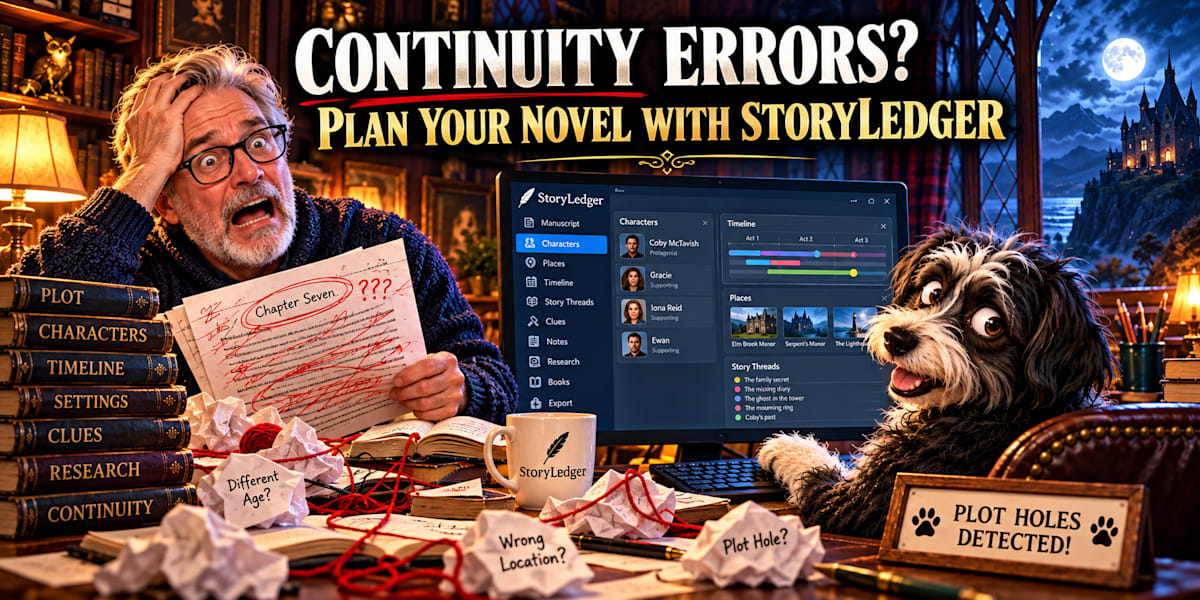
There is a particular kind of anxiety that many fiction authors know all too well. It arrives after the manuscript has been edited, the cover designed, and the book published.
A reader notices something you missed.
Perhaps a character's age doesn't match an earlier chapter. Perhaps an event takes place on the wrong date. Or a detail established halfway through the novel quietly contradicts something that happens later.
These may seem like small mistakes, but to an attentive reader, they can interrupt the experience of an otherwise engaging story.
For authors managing complicated plots, large casts and multiple timelines, keeping track of every detail can become a story in itself.
And sometimes, the most useful writing tools are born from precisely that frustration.
When Reader Reviews Become a Wake-Up Call
As a novelist, I've experienced the uncomfortable feeling of discovering that something slipped through the cracks.
Reader reviews can be wonderfully encouraging. They can also draw attention to mistakes an author never intended to make.
I began noticing continuity problems in my own fiction, particularly as the stories grew more complicated. Characters, relationships, locations, events, clues and timelines were becoming increasingly difficult to manage.
The information existed, but it wasn't always where I needed it.
I could remember the broad direction of a story. What became harder was keeping track of the hundreds of small details that made that story believable.
That realisation eventually led to a question:
What if there were a dedicated story planning tool that helped fiction authors keep their entire fictional world organised?
That question became StoryLedger.
What Should Novel Planning Software Actually Do?
Every novelist works differently. Some begin with detailed outlines and character biographies. Others discover their stories as they write.
But regardless of writing style, complex fiction creates information that needs to remain consistent.
Useful novel planning software should make it easier to organise that information without forcing the writer into a particular creative process.
StoryLedger is a Windows desktop application designed around this idea. It helps authors manage the records that support their manuscripts, including characters, relationships, places, timelines, story threads and clues.
Instead of relying entirely on memory, scattered notes or multiple documents, writers can build a structured reference for their fictional world.
Keeping Track of Characters and Relationships
A character is more than a name on a page.
There are relationships, personal histories, motivations, important dates and connections to other characters.
These details become especially challenging in a series, where information established in one book may matter several books later.
StoryLedger provides dedicated character and relationship records, allowing authors to organise this information and refer to it as their stories develop.
Managing Plot Timelines and Character Ages
A novel set across several months can be complicated enough.
Now imagine a mystery that moves between the present day and events twenty years earlier.
Some characters appear in both periods. Others exist only in the past or the present. Their ages, relationships and personal histories must remain believable throughout.
StoryLedger's timeline and character-age features help authors keep track of these details and identify potential inconsistencies.
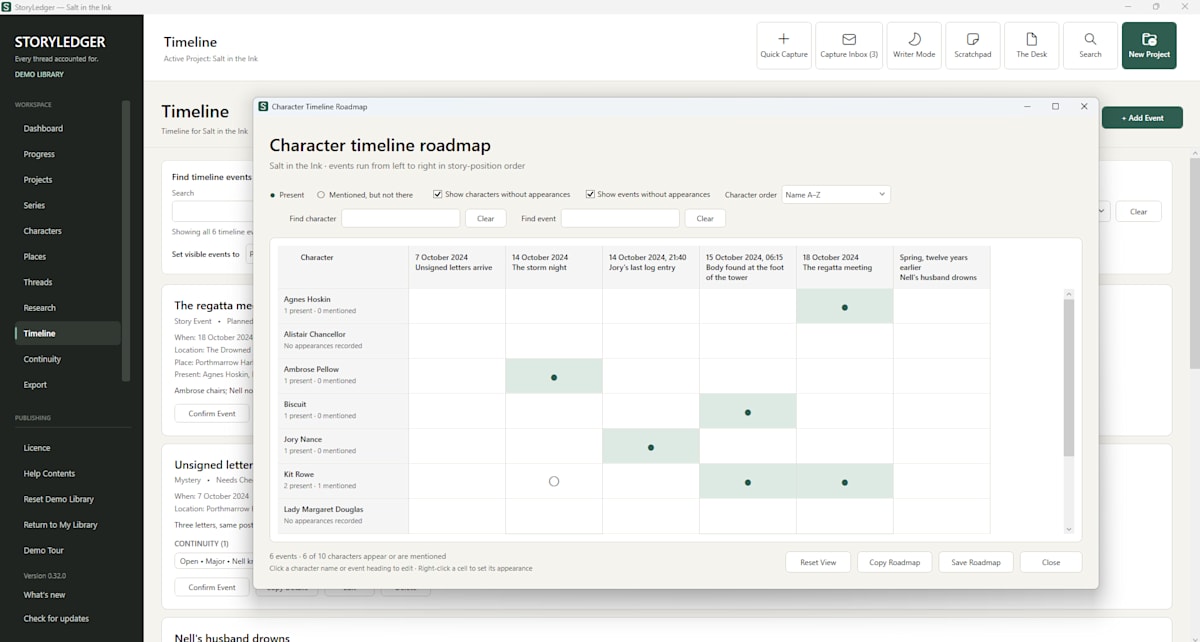
"Track story events, character ages and dates across complicated fictional timelines."
Organising Clues, Story Threads and Research
Mystery writers face an additional challenge: information must be revealed in the right order.
A clue introduced early in the story may become significant much later. A seemingly unimportant conversation may contain information that changes the reader's understanding of an event.
Keeping those threads organised helps authors maintain control over complicated plots.
StoryLedger includes records for clues, story threads and research, allowing writers to organise important details as their manuscripts develop.
It isn't a replacement for imagination. It's a way of keeping the information behind that imagination accessible.
A Real Author's Experience with StoryLedger
One of the most rewarding moments in developing writing software is hearing that another author has found it genuinely useful.
Australian author Gaylene Corben recently shared how StoryLedger has helped her manage her manuscript, A Past to Die For.
Her story involves two timelines separated by twenty years, with some characters appearing in both periods and others appearing in only one.
Gaylene wrote:
"StoryLedger has been invaluable to me – helping me keep track of dates, characters, ages, relationships, clues etc. I would have been in a terrible muddle without it."
— Gaylene Corben, author of A Past to Die For and early StoryLedger tester.
Author website: https://gaylenebcorben.com.au/
Book information: https://gaylenebcorben.com.au/books/#a-date-to-die-for
Gaylene received a complimentary early-testing licence and has given permission for her feedback to be shared.
Her experience captures the problem StoryLedger was created to address.
A novel spanning twenty years isn't simply a matter of remembering what happened in Chapter Three. It requires a reliable understanding of when events occurred, how characters are connected, and whether the details remain consistent across the manuscript.
For writers dealing with historical fiction, family sagas, detective mysteries or multi-generational stories, those challenges can quickly multiply.
A Story Bible That Grows with Your Novel
Many authors create a story bible: a collection of information about their fictional world.
It might contain character profiles, location descriptions, background research, important events and notes about unresolved plot threads.
The challenge is keeping that information organised and useful as the manuscript evolves.
StoryLedger provides a structured environment for building and maintaining those records. It also supports exporting story information into formats that can be consulted outside the application.
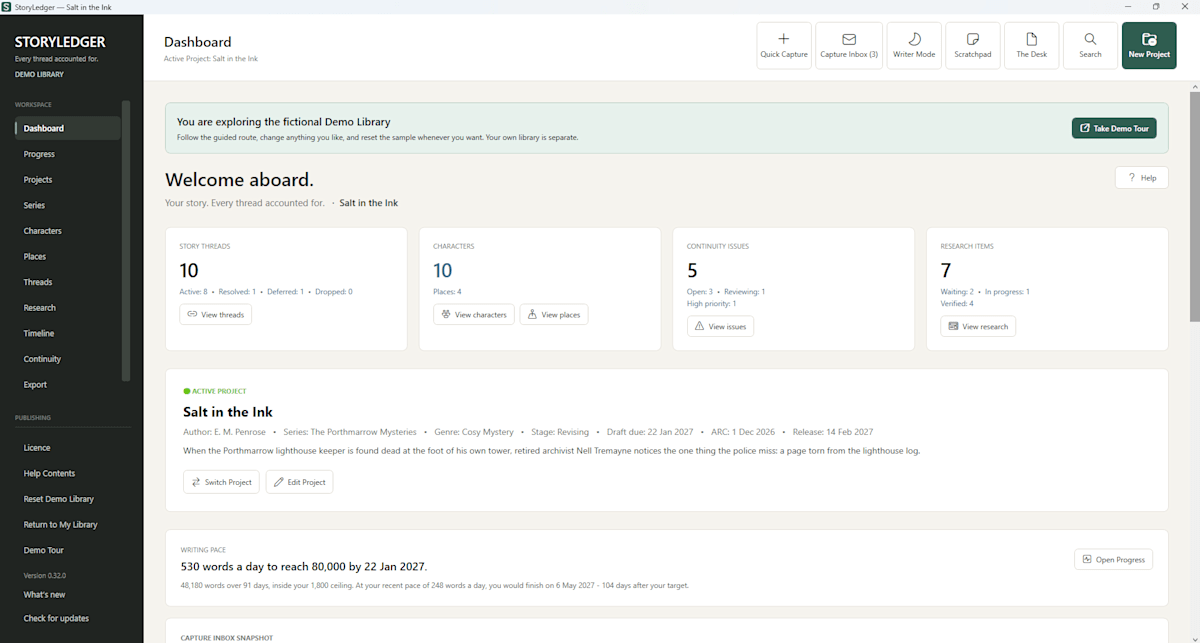
"StoryLedger brings the information behind a novel into one organised workspace."
For authors writing a series, the value of a well-maintained story bible can extend far beyond a single manuscript.
From Story Planning to Manuscript Writing
StoryLedger began as a way to organise the details behind a novel, but the application has continued to evolve.
It now includes The Desk, a manuscript writing environment where authors can work on chapters and scenes while referring to the story records they've already created.
This brings the writing process and the planning process closer together.
The idea is simple: your manuscript should be in front of you, and your story world should be beside you.
We'll explore The Desk in more detail in a separate feature.
Writing Software Should Support the Author, Not Replace Them
StoryLedger does not write your novel for you.
It doesn't generate characters, invent plot twists or replace the creative decisions that make a story your own.
Instead, it helps manage the information that supports those decisions.
The application runs locally on Windows, with no subscription required. A 30-day trial is available for authors who want to explore its features.
And perhaps that's the most important lesson I've learned from developing it.
Continuity mistakes don't necessarily mean an author lacks imagination or skill. Sometimes they simply mean the fictional world has grown too complicated to manage comfortably through memory alone.
Good story planning tools cannot guarantee a perfect novel.
But they can make it easier to keep track of the details that matter.
And if that means fewer continuity mistakes reaching readers, then the lessons learned from those uncomfortable reviews will have been worth something after all.
Discover StoryLedger — Novel Planning and Writing Software for Fiction Authors
https://blurbcraftstudio.com/storyledger.html
Every thread accounted for.